Key takeaways
- Filler migration is when filler moves from where it was placed most often in the lips and under-eyes and it's largely preventable.
- The main causes are overfilling, wrong depth, wrong product for the area, and inexperienced technique.
- Product selection and rheology (G′/cohesivity) matter: match the filler to the area and depth.
- HA fillers, including ELYARA's, are reversible with hyaluronidase, so migration can be corrected.
- The most important prevention step is choosing a skilled, qualified injector.
What is filler migration?
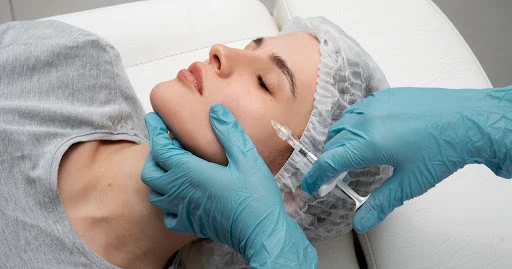
Filler migration occurs when a dermal filler shifts from its original injection site into the surrounding tissue. Instead of staying where it was placed, defining a border, restoring volume, smoothing a hollow, the product spreads, producing a result that can look puffy, heavy, or subtly "off."
It's worth stating clearly: migration is uncommon when treatment is done well, and it is not a flaw inherent to filler itself. It is almost always a consequence of how, where, and how much product was placed, which is exactly why understanding it helps patients make better decisions.
Where does filler migration happen most often?
Some areas are more prone to migration than others because of tissue movement, skin thickness, and the precision the region demands.
Lips. The most commonly discussed area, and for good reason: the lips move constantly, the tissue is soft and dynamic, and the vermillion border is a precise line that's easy to overstep. Lip filler migration typically shows up as fullness above the natural lip border, a blurred edge or "shelf," and in extreme cases, a rolled-outward look. It almost always comes down to too much product placed too superficially.
Under-eyes (tear trough). A technically demanding area with very thin skin and little underlying support. Filler placed too superficially or in the wrong plane can look lumpy or puffy, and can produce a bluish tint known as the Tyndall effect (which is sometimes confused with migration and can occur alongside it). This area rewards conservative dosing and precise depth.
Cheeks and jawline. Less prone to migration when the right product and depth are used, but overfilled cheek filler can drift downward over time and contribute to a heavy mid-face. Here the issue is usually volume and product choice rather than the treatment concept itself.
Signs of filler migration to watch for
Some signs are obvious; others develop subtly over months:
- A blurred or softened lip border where the edge used to be defined.
- Fullness sitting above the lip rather than within it.
- Puffiness or lumpiness under the eyes that lasts well beyond normal post-treatment swelling.
- New asymmetry fillers don't always move evenly.
- A face that simply looks heavier or less defined over time, without anything obviously wrong.
If you notice these, see an experienced injector for assessment rather than waiting.
What causes filler migration?
Most cases come down to one or more of these factors:
- Overfilling. The single biggest driver. When more product is placed than the tissue can hold, it has nowhere to go but outward.
- Incorrect placement depth. Fillers are designed for specific tissue planes; a product meant for deep structural support behaves unpredictably when placed too superficially, and vice versa.
- Wrong product for the area. Soft, highly hydrophilic fillers suit lips but are inappropriate for structural work; firm, cohesive products suit cheeks and jaw but not delicate under-eyes.
- Injector technique and experience. The variable that ties the others together knowing which product, what depth, and when to stop.
- Aftercare in the first 24–48 hours. Aggressive massage, pressure, or intense heat while the filler is still settling can contribute to displacement.
- Cumulative build-up. Repeated top-ups without ever dissolving and resetting can quietly accumulate more product than the tissue can hold.
The role of product selection and rheology
This is where the science matters, and where patients rarely get a clear explanation. Not all HA fillers behave the same way, and the difference is measurable. A key property is G′ (elasticity, or firmness): higher-G′ fillers are more cohesive and hold their shape and position under the pressure and movement of facial tissue, while softer, lower-G′ gels are designed to integrate and move naturally in delicate, mobile areas. Matching G′ and cohesivity to the depth and demands of the area is one of the levers that reduces the risk of spread.
ELYARA's peptide-integrated HA dermal fillers are engineered with defined, consistent rheology for exactly this reason:
| Property | ELYARA Plus | ELYARA Ultra |
|---|---|---|
| Elasticity (G′) | 200 Pa | 400 Pa |
| Best suited to | Mid-dermal refinement fine lines, texture, lips, natural movement | Structural contouring volume, cheeks, jaw, facial architecture |
| Injection depth | Mid to deep dermis | Deep dermis to subcutaneous |
| Longevity | 9–12 months | 12–18 months |
The principle a good injector follows is to choose the protocol and area first, then the product that fits it is the opposite of forcing one filler to do every job. Firmer Ultra provides cohesive structural support where the face needs architecture; refined Plus integrates where movement and subtlety matter. Consistent, well-characterised rheology gives the injector predictable behaviour to plan around, which supports precise placement. You can read more about the technology behind this in the ELYARA story and the clinical data in our resource library.
A note on reversibility: because ELYARA's dermal fillers are hyaluronic-acid based, they remain fully dissolvable with hyaluronidase, an important safety advantage over permanent or non-HA products if correction is ever needed.
Can filler migration be fixed?
Yes, and this is genuinely reassuring. Most fillers used for lips, under-eyes, and cheeks are HA-based, and HA can be broken down with hyaluronidase, an enzyme that dissolves the filler safely and relatively quickly. If filler has migrated, dissolving it is almost always the right first step before any new product is placed.
The key is seeing a provider experienced enough to assess what's actually happening and give an honest recommendation, even if that recommendation is to dissolve, let the area settle, and start fresh rather than adding more.
How is filler migration prevented?
The good news is that migration is largely preventable. The factors that matter most:
- Choose your injector carefully. This is the most important decision by far. Look for a qualified, medically trained injector who can explain their product choices and placement in plain language, who isn't rushing, and whose before-and-afters consistently look natural rather than overfilled.
- Less is usually more. Starting conservatively and building incrementally is always safer than overfilling in one session.
- Use the right product for the right area. Softer, refined gels for mobile, delicate zones; firmer, cohesive products for structural support matched to the correct depth.
- Follow aftercare. In the first 24–48 hours, avoid pressing or massaging treated areas, and skip intense exercise and extreme heat (saunas, hot tubs).
- Be honest about your filler history. Tell your provider about all previous filler so they can judge how much is already in place and whether a reset makes more sense than adding more.
What patients should know before treatment
Filler migration is real and visible when it happens but it isn't a random risk that occurs regardless of where you go. It's almost always the result of specific, avoidable factors, and the single most important one is the person holding the syringe. Ask your provider what product they're using and why, what depth and area they're treating, and how much. A confident, science-led answer is a good sign. If you're being pushed toward more volume than you asked for, that's a reason to pause.
For clinicians: designing for predictability
For the aesthetic physicians and clinics ELYARA works with, predictable placement starts with predictable material. Defined, reproducible rheology and peptide-integrated HA give a consistent gel to plan around, while the regenerative peptide component supports progressive collagen and tissue quality beyond volume alone. Clinics receive injection protocols, clinical data, and training on onboarding details on our education leadership page, or partner with us to discuss the range.
Talk to a provider or bring ELYARA to your clinic
If you're a patient, ask your qualified injector which product and technique they're using and why, and whether they work with well-characterised, CE-approved HA fillers like ELYARA Plus and Ultra. If you're a clinician, partner with ELYARA to bring peptide-integrated regenerative fillers, injection protocols, and clinical support into your practice.
Frequently asked questions
What causes lip filler to migrate?
Lip filler most often migrates from too much product placed too superficially, an inappropriate soft product, or inexperienced technique. Because the lips are highly mobile and the border is a precise line, overfilling tends to show as fullness above the natural lip edge.
Can filler migration be fixed?
Yes. Hyaluronic acid fillers, including ELYARA's dermal fillers, can be dissolved with an enzyme called hyaluronidase, which safely breaks the filler down. Dissolving migrated filler is usually the first step before any new product is placed.
How do you prevent filler migration?
Choose an experienced, qualified injector; avoid overfilling; use the right product at the right depth for the area; follow aftercare in the first 24–48 hours; and be honest about your full filler history so cumulative build-up can be assessed.
Does a firmer filler migrate less?
Product firmness (measured as G′) is one factor. Higher-G′, more cohesive fillers hold their position well in structural areas, while softer gels are designed to integrate in delicate, mobile zones. Matching the filler's rheology to the area and depth rather than firmness alone is what supports stable, natural results.
Is filler migration common?
No. Migration is uncommon when treatment is performed by a skilled injector using an appropriate product. The majority of patients treated well never experience it.
How long after filler can it migrate?
Displacement is most likely in the first 24–48 hours while the filler settles, which is why aftercare matters then. Gradual migration can also develop over months, usually linked to overfilling or repeated top-ups without dissolving.